Building smart products for fun — experiments at the edge of AI and product thinking.
I'm an AI Product Manager who loves building things for fun. These projects are experiments, side bets, and learning exercises — not client work. Mostly curious about where AI meets real human problems — lately that's meant voice cloning, transcription, and localization tooling that helps content travel across languages and markets.
From script to Premiere-ready sequence — automatically. An end-to-end AI pipeline that transcribes a voiceover, plans every shot, sources and ranks the footage, writes on-screen graphics, and exports a finished Premiere Pro project. Built solo, top to bottom.
Editors making video-heavy content — tutorials, documentaries, product explainers — burn hours hunting stock sites for B-roll: searching, downloading, renaming files, and hand-building text-overlay graphics. For recurring topics the same clips get found and re-downloaded across projects, wasting time and API quota. B-Roll Finder automates the entire search-and-select loop, and gets faster with every project by remembering the footage you've already used.
This is my favorite thing I've built — a genuinely agentic product, not a demo. It orchestrates transcription, multiple reasoning LLMs, parallel web search, retrieval, and AI-driven evaluation into one tool that exports a real Premiere project — collapsing hours of tedious editing into a single click, and compounding in value the more you use it. It's the project where product thinking and hands-on engineering meet: every feature exists because it removes a real, repeated pain from a real workflow.
A state-of-the-art framework for automated cardiovascular disease diagnostic classification using 12-lead ECG signals — built end-to-end as a solo project.
Cardiovascular diseases are the leading cause of death globally. Early diagnosis via ECG is critical but requires specialized expertise. I built an end-to-end deep learning pipeline to classify ECG signals into 5 diagnostic superclasses: Normal, Myocardial Infarction, ST/T Change, Conduction Disturbance, and Hypertrophy.
This project sits at the intersection of AI and real clinical impact. The ensemble approach achieved 0.932 Macro-AUC on the PTB-XL test set, with strong external generalization (0.844 AUROC). It demonstrates how thoughtful architecture choices and training techniques can meaningfully close the gap between AI models and clinical-grade tools.
A comprehensive AI-powered system for automated cervical cytology image analysis and pap smear classification with explainable AI capabilities.
Manual review of cervical cytology images is time-consuming and subjective. Automating the classification of cells into normal, dysplastic, and malignant categories can significantly improve the efficiency and consistency of pap smear screenings.
A desktop content-localization pipeline for creators — dub video into a cloned voice, transcribe and caption it with full RTL support for Persian/Arabic, and cut it into distribution-ready shorts, all from one clean GUI. Built on RVC voice conversion, Groq's cloud Whisper, an OpenRouter LLM, and yt-dlp to turn a real dubbing workflow into a paste-and-go tool.
Localizing video for a new market means re-voicing it in another language, getting captions to match the new audio and script correctly — including right-to-left languages — and often cutting the result down into shorts for distribution. That chain normally runs across separate tools with no shared pipeline. I built Tovo to run dub, caption, and clip as one paste-and-go desktop app.
Tovo is the tool I actually use — a polished native GUI wrapped around powerful CLI and AI engines so re-voicing, captioning, and clipping a video for a new market doesn't mean touching a terminal or juggling five disconnected tools. It's a hands-on study in productizing an AI dubbing pipeline: voice cloning, cloud transcription, and LLM-driven clipping orchestrated into one resilient, human-in-the-loop workflow that handles the real edge cases — RTL captions, format merging, bot walls, missing binaries — so the person doing the dub doesn't have to.
An AI-native support agent that intercepts internal IT/HR queries, answers them from proprietary documentation via RAG, and either resolves the issue instantly or routes it to the correct human queue — never guessing. Shipped with a full PRD.
Internal support teams drown in repetitive IT and HR tickets — VPN password resets, PTO policy questions, holiday calendars — that are already answered somewhere in company documentation. Each one still costs a human a context-switch. The hard part isn't answering the easy questions; it's knowing which questions an AI shouldn't answer, and getting those to the right person fast.
This started as a PRD, not a notebook. The defining product call was the confidence guardrail: an enterprise support bot that confidently invents a VPN procedure is worse than no bot at all. By measuring retrieval relevance and routing low-confidence queries to humans, the copilot is trustworthy by construction — it only speaks when the docs back it up, and gracefully hands off when they don't. That "know when to defer" behavior is what makes it deployable inside a real org.
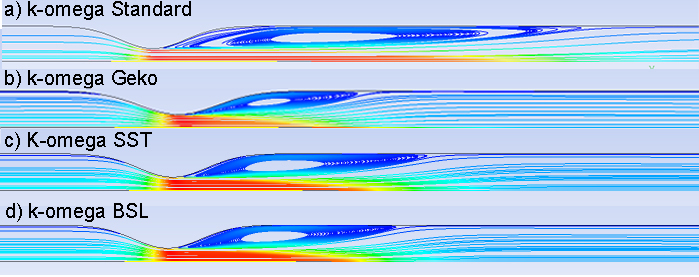
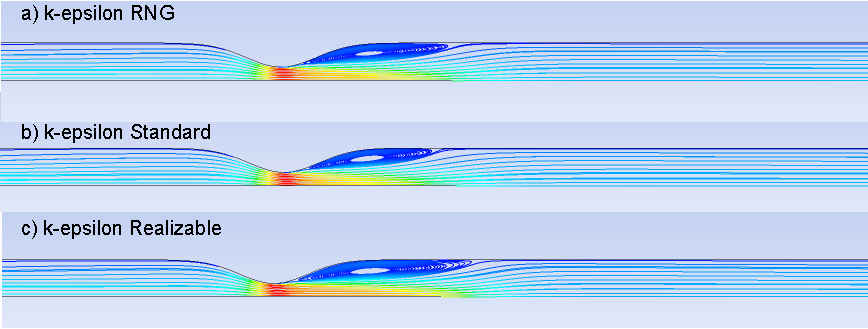
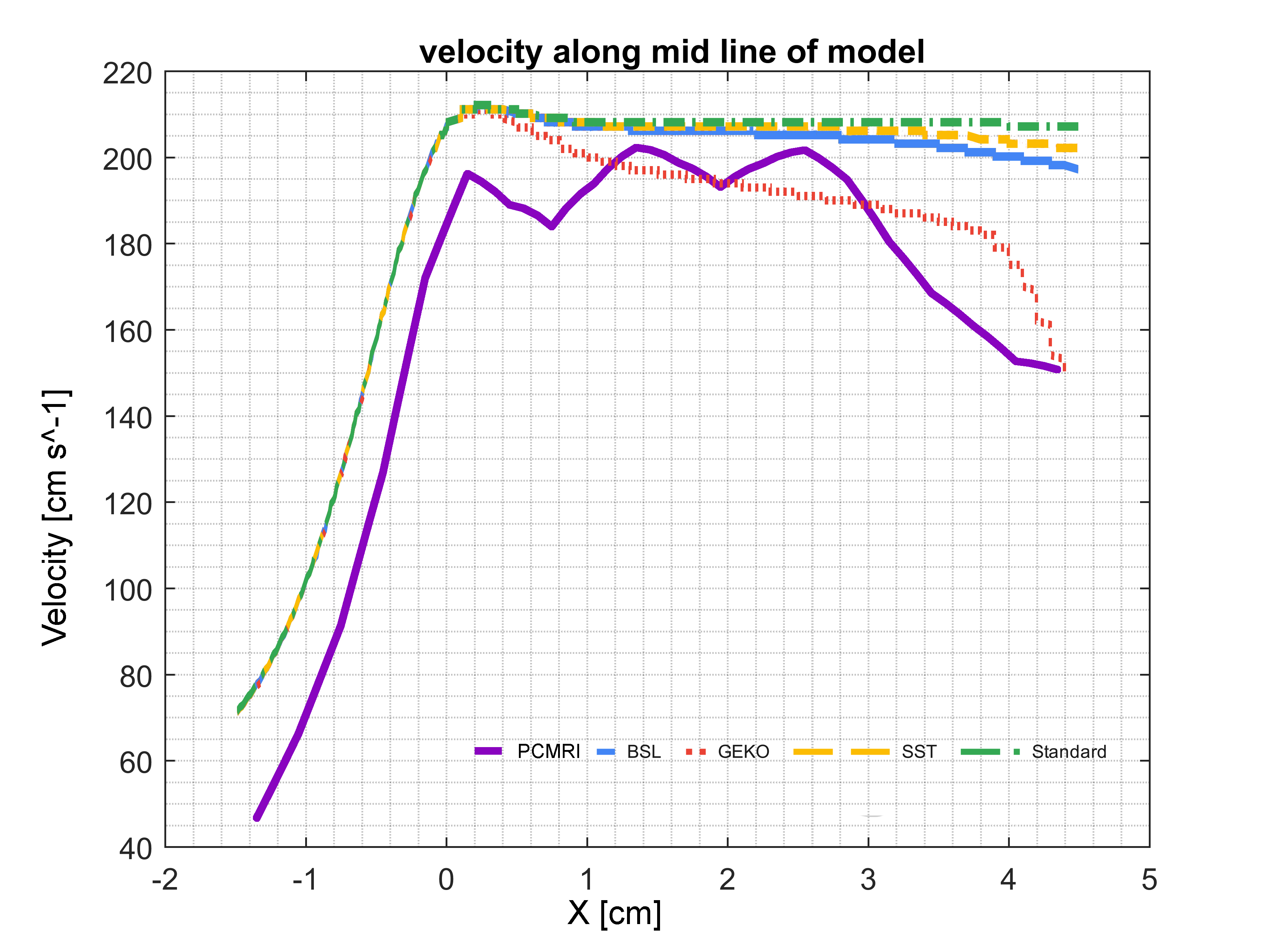
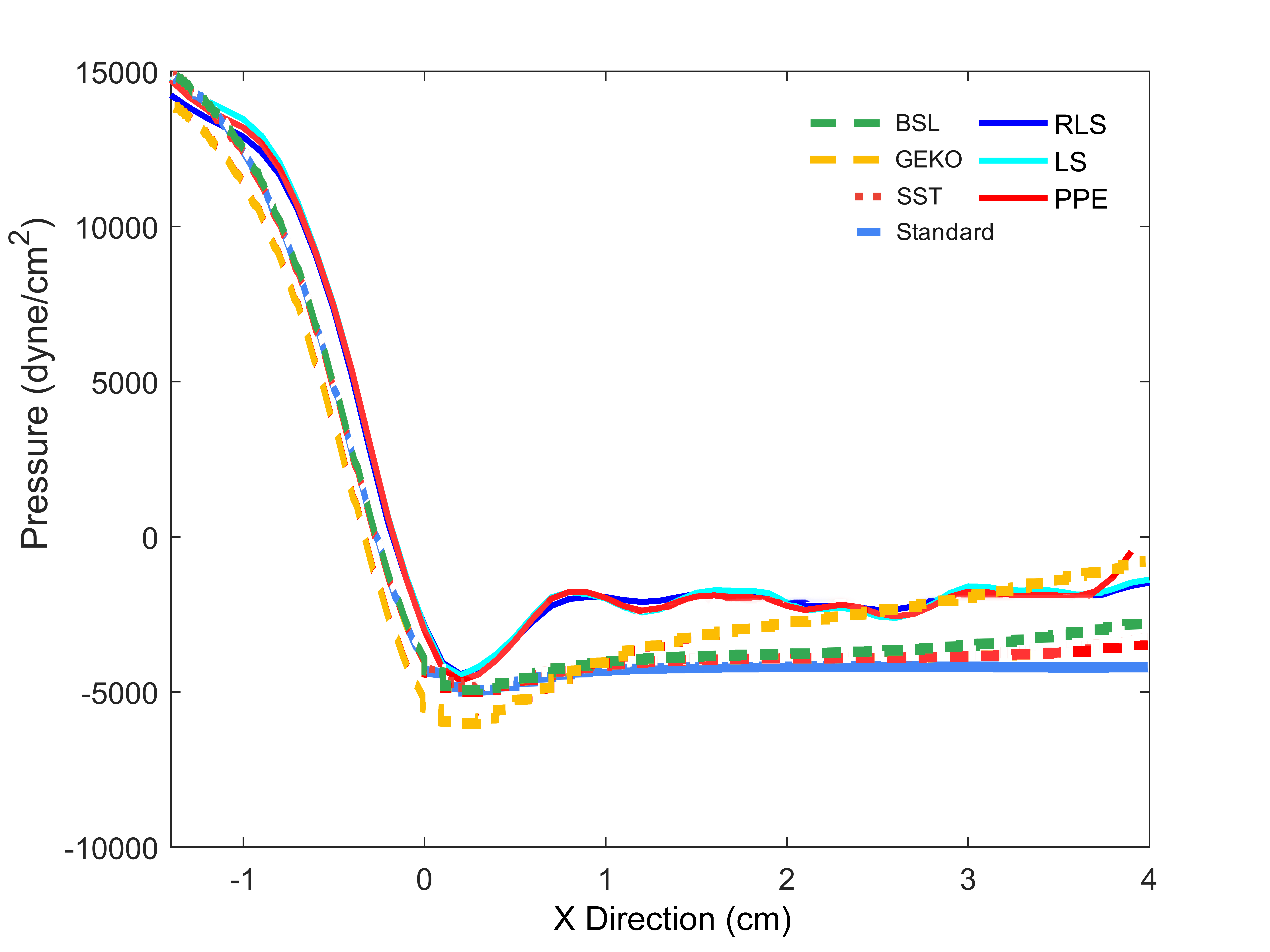
Master’s thesis research submitted as a journal paper — calibrating the k–ω GEKO turbulence model to accurately simulate hemodynamics in severe aortic stenosis and validate against PC-MRI experimental data.
Aortic stenosis is a life-threatening narrowing of the aortic valve. Accurately predicting blood flow in stenosed arteries is critical for non-invasive diagnosis — but only if the turbulence model captures the complex post-stenotic flow separation and pressure recovery. This study benchmarked five turbulence models against PC-MRI data to find the most accurate approach.
Yaghoubi S., Salehi E., Kermani S., Jahangiri M. “Computational Analysis of Turbulent Blood Flow in Stenosed Aorta Using Modified k–ω Geko Model.” Submitted to Journal of Engineering, June 2026.